
Learn.
This section offers accessible education on the principles behind my work. Principles on body, mind, & breath.
This is where understanding meets experience.
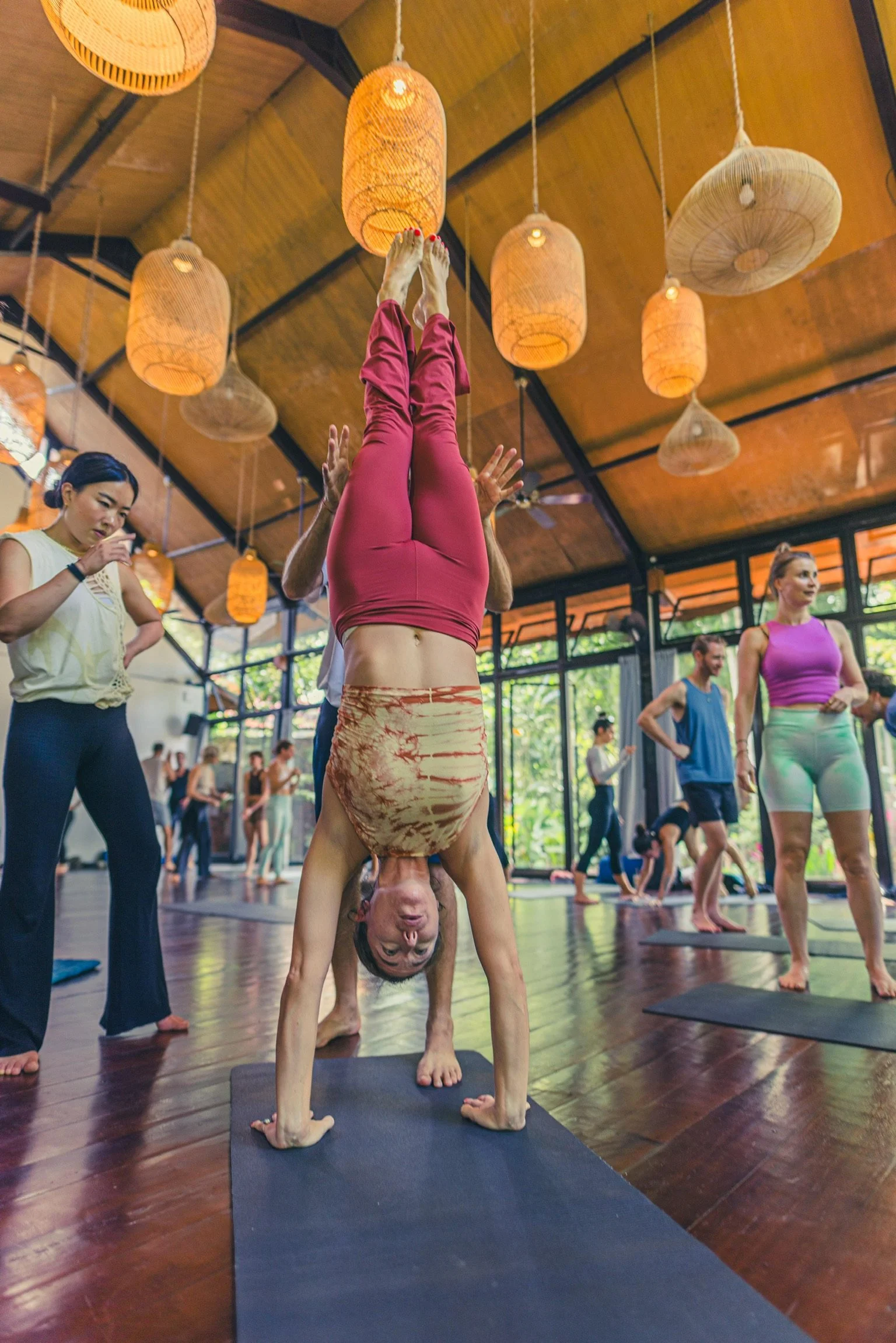
Body

Mind

Breath
Learn: Body

-
Body awareness is the practice of tuning into the subtle sensations of your body in the present moment. It’s the ability to notice your breath, posture, and muscle tension, without judgment. It is the practice of simply observing what is happening inside your body with curiosity. Body awareness gently brings you back home to yourself. Through intentional breathwork, mindful movement, and somatic practices, body awareness becomes a bridge between mind and body. In body-mind-breath coaching, developing body awareness is foundational. The breath becomes an anchor. Sensation becomes information. And the body becomes a partner in your growth. When you strengthen your body awareness, you strengthen your capacity to pause, choose, and respond from a place of alignment. If you’re ready to move from autopilot to embodied presence, body awareness is where the journey begins.
-
The felt sense is the subtle, embodied knowing that lives beneath words and thoughts. A concept developed by Eugene Gendlin, felt sense is described ad an “internal aura that encompasses everything you feel and know about the given subject at a given time–encompasses it and communicates it to you all at once rather than detail by detail.” The felt sense invites you to pause and sense situations from within.
In body-mind-breath coaching, Natalia creates space for you to slow down and notice your inner experience through breath awareness, guided somatic inquiry, gentle attention to sensation, and curiosity without judgment.
When you learn to access your felt sense, you begin to move to embodied wisdom. You develop a deeper trust in your inner knowing. When we listen, the body shows us the way.
-
In a world that moves quickly, slowing down can feel unfamiliar. Uncomfortable. Even wrong at first. But when it comes to learning, healing, and nervous system regulation, intentionally slowing down is profoundly powerful.
Slow movement gives your mind and body time to communicate. Instead of rushing through the motions on autopilot, you can begin to notice subtle sensations, shifts, patterns. This awareness strengthens the mind-body connection and deepens your capacity to learn from within.
1) Slow movement builds neural pathways
2) Nervous system regulation: When paired with breath, slow movement signals safety. The body can shift out of the stress response and into a state where growth is possible.
3) Increases interoceptive awareness: You can feel what is happening inside your body in the present moment. Slowing down creates space to notice what’s actually happening.
4) Support emotional processing: Moving slowly creates space to sense, release, and integrate rather than overwhelm or suppress emotions.
-
Movement is one of the body’s most direct languages for processing what the mind cannot always name. Physical expression allows energy to shift and dissipate. Stagnant patterns stored in the body find release, and the nervous system can recalibrate, bringing a sense of safety and presence. Movement also bridges the gap between inner experience and outer action, helping us integrate feelings, thoughts, and sensations in a grounded way.
Movement is not just exercise. It’s a form of self-study, a tool for regulation, and a pathway to embodiment. By giving the body space to express and the mind permission to witness, we create a cycle of release, restoration, and renewal.
-
The nervous system is the body’s communication network, constantly sensing, regulating, and responding to the world around us. It holds more than information about danger or safety. It stores patterns of tension, stress, and emotions.
When the nervous system is stuck in survival mode, the body feels heavy, the mind restless, and emotions difficult to navigate.
By engaging in movement, breathwork, somatic practices, and mindfulness, we can gently shift these patterns, allowing energy to flow, tension to release, and the body to return to a state of balance.
Learning to tune into the nervous system is a practice in listening and responding with awareness instead of reactivity. It’s the bridge between our inner world and outer experience. By cultivating regulation, we create space for healing, presence, and freedom in both body and mind.
Learn: Mind

-
The mind is not fixed. The mind is adaptable, capable of growth, and constantly reshaping itself through experience. This ability, called neuroplasticity, allows us to form new patterns, shift old habits, and rewire our responses.
Through intentional practice, whether mindset coaching or meditation, we can strengthen helpful neural pathways and weaken those that no longer serve us. Neuroplasticity is proof that change is possible. The brain responds to attention, awareness, and consistent action, creating lasting transformation from the inside out.
By understanding and working with this natural adaptability, we gain agency over our thoughts, emotions, and behaviors, opening the door to resilience, clarity, and the life we choose to build.
-
Our thoughts shape how we experience the world, and sometimes old patterns keep us stuck in fear, self-doubt, or limitation. Cognitive reframing is the practice of noticing those patterns and intentionally shifting perspective, giving your mind a new lens through which to interpret experiences.
Natalia uses what she calls conscious word substitution: a mindful approach to replacing reactive or disempowering language with words that support growth and self-compassion. This simple yet powerful technique helps retrain thought patterns, influence emotional responses, and create space for choice and agency in everyday life.
Through cognitive reframing, the mind becomes a tool for empowerment rather than a source of limitation, allowing old stories to transform into narratives of possibility.
-
The mind and body are not separate systems. They constantly communicate with each other. The mind-body connection refers to the powerful connection between our thoughts, emotions, attitudes, and beliefs (the mind) and our physical functioning (the body). It reflects how mental and emotional states can directly influence physical well-being and vice versa. Understanding this connection can empower individuals to take a more holistic approach to wellness.
Ways to strengthen the mind-body connection:
-mindfulness & meditation
-breathwork
-physical movement such as yoga
-journaling & self-reflection
-
Visualization is a powerful tool. Visualization is the practice of creating mental images of desired outcomes, experiences, or goals, aligning the mind and body toward achieving them. Research has shown that the brain responds to imagined experiences in ways similar to how it responds to real experiences. When you consistently visualize desired outcomes, you begin to shape your thoughts, emotions, and behaviors to support them. It helps bridge the gap between where you are and where you want to be, while creating a powerful internal environment that supports growth and intentional living.
-
Mindfulness is the practice of paying full attention to the present moment with openness, curiosity, and without judgment. Presence refers to the state of being fully engaged in the here and now.
In a fast-paced world, it is easy to live on autopilot. Mindfulness invites you to slow down and become aware of your thoughts, emotions, and sensations as they arise.
Practicing mindfulness and presence can reduce stress, improve emotional balance, and enhance overall well-being. It allows you to respond more thoughtfully to what comes up, rather than reacting automatically.
Ways to cultivate mindfulness:
-mindful breathing or meditation
-engage fully in everyday activities with intention (eating, walking, listening)
-take pauses throughout the day to check in with yourself, your breath, and your body
-use grounding techniques to return to the present moment
Learn: Breath
-
Breathwork involves intentional, conscious breathing techniques. Breathwork is used to influence mental, emotional, and physical states.
Breathing is one of the few automatic bodily functions that we can consciously control.
-
Breathwork offers a wide range of science-backed physical, mental, and emotional benefits such as lowering heart rate, improving lung capacity, enhancing the immune system, aiding digestion, improving mood, reducing stress, promoting better sleep quality, and sharpening focus and mental clarity.
-
Breathwork physically manipulates the nervous system, shifting from sympathetic to parasympathetic states.
By changing the rhythm, depth, and pace of the breath, we can send signals to the brain that either activate or calm the body.
Key Scientific Benefits:
-reduces stress and anxiety
-improves oxygen delivery
-improves energy levels
-support heart rate variability (HRV)
-enhances mental clarity and focus
-
Nervous system regulation: Slow, deep breathing activates the parasympathetic response, while rapid breathing can stimulate the sympathetic response.
Carbon dioxide and oxygen balance: Breath patterns influence CO2 levels, which play a key role in oxygen delivery throughout the body.
Heart rate and heart rate variability: Breathing rhythms can synchronize with heart rhythms, promoting calm and resilience.
Brain signaling: The breath communicates with brain regions involved in emotion, attention, and stress response.
Muscle and tension release: Conscious breathing can reduce physical tension and signal relaxation.